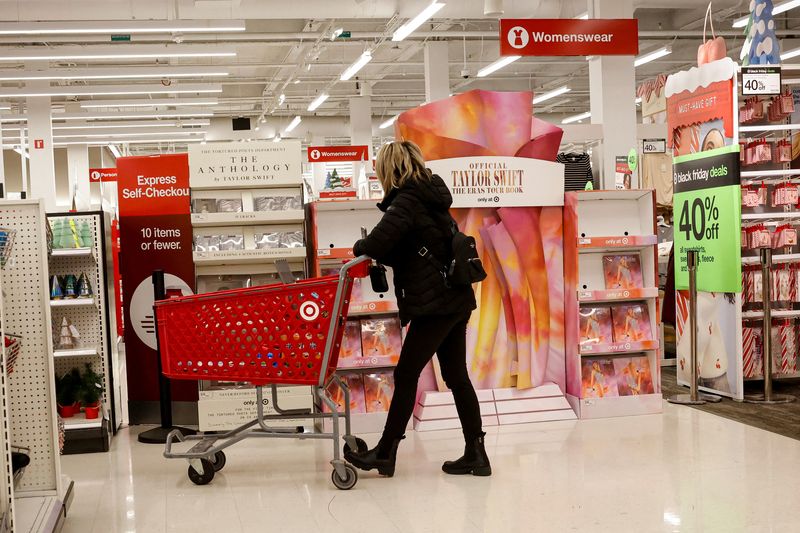
Target’s forecast full-year comparable sales below estimates on Tuesday despite strong holiday-quarter demand, and said uncertainty around tariffs as well as consumer spending would weigh on first-quarter profits.
The company joined bellwether Walmart (NYSE:WMT), as well as electronics retailer Best Buy (NYSE:BBY) in raising caution about its expectations for the year as sticky inflation and tariffs on imports proposed and implemented by President Donald Trump temper demand.
New 25% tariffs on imports from Mexico and Canada took effect on Tuesday, along with a doubling of duties on Chinese goods to 20%.
Prices could increase over the next couple of days for seasonal produce such as avocados as the company depended on Mexico “for a significant amount of supply” in those categories, Target’s chief executive officer Brian Cornell told CNBC in an interview.
“Those are really short supply chains. We depend on Mexico during the winter. We’re going to try to make sure we can do everything we can to protect pricing. But if there’s a 25% tariff, those prices will go up … certainly over the next week,” Cornell said.
Target expects comparable sales to be about flat in the year through January 2026, compared with analysts’ average estimate of 1.86% growth, according to data compiled by LSEG. The company’s earnings forecast of $8.80 to $9.80 per share was largely in line with estimates.
While the annual forecast does not consider any impact from tariffs, consumers continue to be stressed and at least some of the noise surrounding the levies hit sales in February, a Target spokesperson said.
That could pressure profit in the first quarter, which typically ends around April, the company said, adding that it also saw weak demand for apparel and other discretionary products during February.
“We will continue to monitor these trends and will remain appropriately cautious with our expectations for the year ahead,” Chief Financial Officer Jim Lee said in a statement.
The disappointing outlook may reflect the mood of shoppers who in January pulled back spending far more than expected and showed that they are much more worried about the impact of tariffs on their wallets.
“In the near term, the consumer is hibernating for a variety of reasons,” said Gordon Haskett analyst Chuck Grom.
Target, in particular, has also faced more backlash and boycotts by its patrons for ending its diversity and inclusion (DEI) initiatives in January, with some noting the company’s reputation for inclusiveness had helped it attract a younger, more diverse consumer base.
Foot traffic at Target stores dropped 6.1% on average from the week of January 27 through February 23, according to data from Placer.ai. Target did not mention any impact of ending its DEI initiatives in its outlook.
The Minneapolis-based retailer’s shares reversed course from early premarket gains, and were last down about 2%.
DISCOUNTS, ONLINE SHOPPING LIFT HOLIDAY SALES
Still, Target’s holiday quarter results beat estimates as heavy discounts and promotions helped drive sales in categories such as toys, apparel and electronics.
For the quarter ended February 1, Target reported a 1.5% rise in comparable sales, topping estimates of a 1.3% increase. Earnings fell 19.3% to $2.41 per share, but beat estimates of $2.27.
Beauty, apparel, toys and sporting goods were top performers during the holiday quarter, while home decor and furnishing sales were negative, a spokesperson said.
Shoppers also did more of their shopping online, with digital comparable sales up 8.7%, which led to an increase in costs of box shipping, or those made within one or two days, he noted.
Target was aggressive with its marketing and merchandising strategies as consumers spent selectively on popular products during the holidays. The company partnered exclusively with pop star Taylor Swift and attracted Black Friday sales for Swift’s Eras Tour book and vinyl albums.



 MY INVESTMENT NEWS
Leave a comment