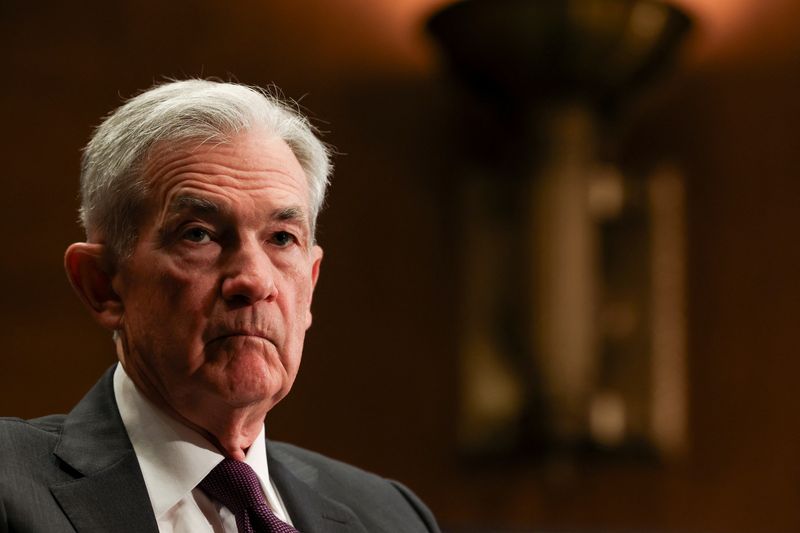
A key Federal Reserve interest rate decision is set to grab the limelight this week, particularly after the start of a criminal investigation into Fed Chair Jerome Powell exacerbated fears over the independence of the central bank. Elsewhere, a raft of high-profile tech companies are due to report quarterly earnings this week, with investors expecting them to start showing returns on huge artificial intelligence investments. Meanwhile, President Donald Trump lodges a fresh tariff threat against Canada, keeping geopolitical tensions on the list of potential risks facing markets.
1. Fed decision ahead
Headlining this week’s slate of events will likely be the Fed’s latest interest rate decision on Wednesday.
The two-day gathering will see policymakers discuss how to calibrate borrowing costs during a time when the state of the American economy is broadly strong.
Employment, the focus of a string of rate cuts by the Fed in 2025, appears to be stable, albeit in an environment of muted hiring and low layoffs. Inflation, the Fed’s other major pillar, has been steady, if elevated, above the central bank’s 2% target.
However, some analysts have flagged that the economy is turning “K-shaped,” a scenario in which higher-income households and corporations are making up a large portion of the overall activity while those on lower wages are grappling with heightened living costs.
Against this background, the Fed is widely expected to keep rates unchanged at a range of 3.5% to 3.75%. According to CME FedWatch, the next Fed reduction is not anticipated to arrive until June.
2. Powell replacement in focus
January’s Fed meeting comes as President Trump has frequently called for aggressive and quick rate cuts to boost the economy, and has badgered officials for not doing so.
While these statements have long fueled concerns over the Fed’s independence from political influence, these worries were supercharged earlier this month, when the Justice Department opened a criminal investigation into Fed Chair Jerome Powell. In a rare public address, Powell hit out at the probe, describing it as a ploy to influence rates in Trump’s preferred direction.
Powell, who was initially appointed as Fed Chair during Trump’s first term, was making the comments as he faces just a few months left at the helm of the central bank. Whether the spat with the White House leads him to stay on the Fed’s rate-setting board — and continue influencing monetary policy — remains a key question for markets.
Another source of uncertainty surrounds Trump’s pick to replace Powell. Prediction markets now see BlackRock executive Rick Rieder as the top candidate, surpassing former Fed Governor Kevin Warsh. Trump, meanwhile, has hinted that he may be down to one person to succeed Powell.
3. Big tech earnings ahead
On the earnings calendar, the spotlight will be on a bevy of results from big-name technology firms, including Facebook-owner Meta, software giant Microsoft, and iPhone-maker Apple.
Powered in part by enthusiasm around the applications of cutting-edge artificial intelligence models, these businesses have largely dominated stock markets in recent years.
Ambitions to become the frontrunner in the AI race mega-cap tech names to pursue a massive jump in capital spending, especially on building the huge data centers and securing the semiconductors needed to underpin AI applications.
While investors have long seemingly tolerated the expenditures, expectations for notable returns in company revenues have begun to grow, turning 2026 into a “show me” year for big tech players, analysts have said. This week’s slew of earnings could offer the first indications of whether Wall Street’s demands are being met.
4. ASML to report
Over in Europe, ASML, the world’s largest manufacturer of chipmaking gear, is set to report on Wednesday.
The Dutch firm’s market value surpassed the $500 billion threshold earlier this month, following major customer TSMC’s unveiling of greater-than-anticipated capital expenditure plans to keep pace with soaring AI chip demand.
ASML, in the process, extended its lead as the most valuable European company, and analysts have been keen to see if the AI boom can expand the company’s presence even further.
Still, ASML has so far only offered a relatively tepid growth forecast for the current year. At worst, sales are seen coming in flat, causing some observers to suspect that the pace of creation of new plants may be lagging behind runaway AI demand.
5. Trump’s fresh tariff threat
After apparently climbing down from a claim that he would slap punitive levies on several European countries unless the U.S. was allowed to purchase Greenland, Trump said over the weekend that would place a 100% duty on Canada if America’s northern neighbor strikes a trade deal with China.
Trump warned on social media that Prime Minister Mark Carney, who has recently visited China to discuss trade and argued for a need for smaller countries to address economic coercion by global superpowers at a speech in Davos last week, could imperil Canada by reaching a new agreement with Beijing.
“China will eat Canada alive, completely devour it, including the destruction of their businesses, social fabric, and general way of life,” Trump wrote, adding that “all Canadian goods and products coming into the U.S.A.” would face the 100% import tax if an accord is made.
Carney, for his part, said Canada has “no intention” of going after a free trade deal with China. He added that Ottawa respects its commitments made under a separate pact with the U.S. and Mexico, and would inform both of such an agreement before pursuing it.
“[W]e don’t think investors need to spend a lot of time worrying about Trump’s 100% Canada tariff actually coming to fruition, but the fact he continues to impetuously make these threats is gradually undermining sentiment,” analysts at Vital Knowledge said in a note.
 MY INVESTMENT NEWS
Leave a comment