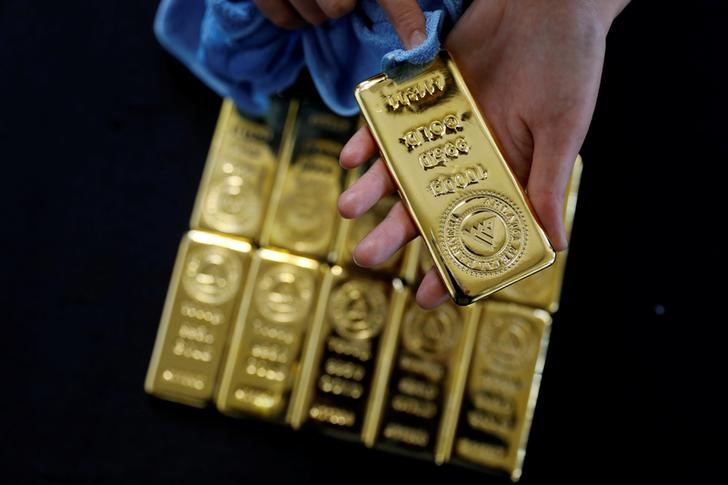
Gold prices rose Wednesday, rebounding after the previous session’s weakness, as investors assessed the impact of newly imposed U.S. tariffs, and awaited U.S.-Iran talks later this week.
At 04:25 ET (09:25 GMT), Spot gold was up 0.9% at $5,187.64 an ounce and U.S. Gold Futures gained 0.6% to $5,206.10/oz.
The yellow metal fell 1.6% on Tuesday after four straight sessions of gains.
Traders weigh impact of fresh U.S. tariffs
The U.S. began collecting a temporary 10% global import tariff on Tuesday, with the Trump administration working to increase the levy to 15%, a move that has stoked uncertainty over global trade and inflation.
The tariff action followed a U.S. Supreme Court ruling last week that struck down earlier sweeping duties imposed under emergency powers, prompting Washington to reintroduce tariffs under alternative legal authority.
Geopolitical tensions also remained in focus, with the U.S. and Iran due to hold a third round of talks on Thursday in Geneva over Tehran’s nuclear programme.
However, gains in gold were capped by expectations that U.S. interest rates will remain elevated.
Two Federal Reserve officials on Tuesday signalled little appetite to change the central bank’s policy stance in the near term, reinforcing a higher-for-longer rate outlook that typically weighs on non-yielding assets such as gold.
Silver, platinum rally; copper sees demand recovery
A slightly weaker U.S. dollar also provided support, making dollar-priced metals less expensive for overseas buyers.
In other precious metals, silver prices jumped nearly 3.5% to $90.55 per ounce, while platinum surged over 5% to $2,309.60/oz.
Benchmark Copper Futures on the London Metal Exchange edged up 0.5% to $13,295.72 a ton and U.S.Copper Futures rose 0.6% to $6.0295 a pound.
“Copper prices on the LME have moved back above $13,000/t as Chinese participants return from the Lunar New Year holidays on Tuesday, increasing import appetite,” said analysts at ING, in a note.
“Overall, the market is showing early signs of demand recovery. Yet high inventory levels are likely to cap the pace of any near‑term tightening. The next key indicator will be whether the import arbitrage stays open and leads to sustained LME stock draws, accompanied by a quicker‑than‑seasonal decline in SHFE inventories.”

 MY INVESTMENT NEWS
Leave a comment