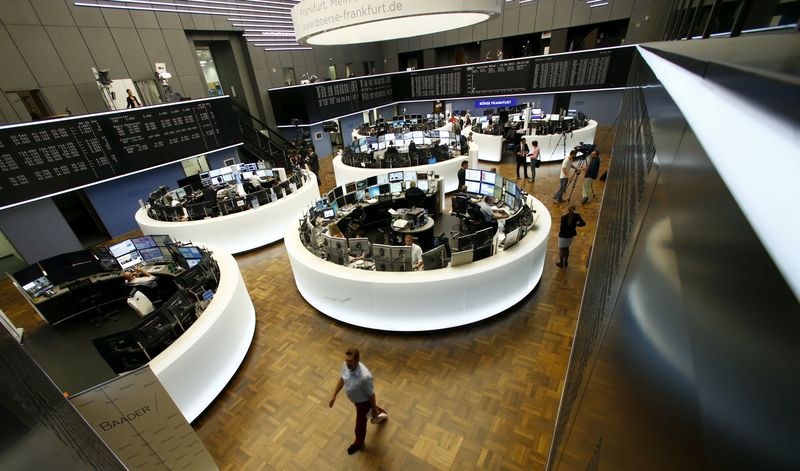
European stocks opened lower on Thursday, as investors attempted to keep pace with rapidly changing developments in the war in Iran.
By 04:10 ET (08:10 GMT), the pan-European Stoxx 600 had fallen 0.7%, the Dax in Germany had dipped 0.9%, the CAC 40 in France had declined 0.5%, and the FTSE 100 in the U.K. had dropped 0.6%.
Tehran is reviewing a 15-point peace proposal from the United States, according to media reports, although the two sides appear to remain far from reaching an immediate accord to end an almost month-old conflict.
U.S. President Donald Trump has told aides that he would like to see a swift resolution to the fighting, signaling that the White House is looking for an off-ramp from its joint assault on Iran with Israel, the Wall Street Journal reported.
Trump has claimed that Iran is now desperate to make a deal to halt hostilities, yet this account conflicts with that of the Iranian foreign minister, who has said Tehran has no intention of holding negotiations aimed at slowing down the war.
Oil prices have remained elevated, reflecting ongoing investors fears over a prolonged closure to the Strait of Hormuz, a crucial conduit through which roughly a fifth of the world’s oil and natural gas traverses. The threat of Iranian attacks has effectively shuttered the strait for weeks, pushing up crude prices and reigniting worries over a spike in inflation in countries around the globe.
Some central banks, as a result, have begun to suggest that interest rate hikes could be back on the table. On Wednesday, European Central Bank President Christine Lagarde said an uptick in borrowing costs could be in order even in the event of “not-too-persistent” inflation caused by an Iran-related energy shock.
The futures contract expiring in May for Brent crude, the global benchmark, was last higher by 2.8% at $105.04 a barrel. Brent has recent declined from roughly $110 a barrel last week thanks to hopes for an impending conclusion to the Iran war, yet remains well above levels before the outbreak of the conflict in late February.
Analysts have also flagged that, even if the war were to end shortly, investors may likely demand a risk premium for oil in the near-term, meaning crude may not immediately sink back down to pre-conflict levels.


 MY INVESTMENT NEWS
Leave a comment