Armed with a smartphone, Anza Zafran Utama, a 9-year-old boy in the Indonesian city of Bogor, is either a dinosaur or a shooter, depending on his mood.
Zafran and his friends regularly hang out on Roblox, the U.S. platform where children can build immersive 3-D worlds and communities, but from Saturday under-16s are set to be restricted from using the platform under new government rules, after officials designated it high risk.
“I like to joke around with my friends there,” Zafran said of Roblox.
His mother, Andina Dwi, said he spends as long as four hours on the platform after school, getting up only to charge his phone.
“When he plays Roblox he forgets time,” said Andina, 32, who supports the controls.
Indonesia’s social media curbs, which the government says are intended to reduce the risk of cyberbullying and addiction, follow a ban in Australia last year over concerns about social media’s potential harms to young people’s mental health. In the U.S., where social media companies face thousands of lawsuits over their platform designs, a court on Thursday found Meta and Alphabet’s YouTube created addictive products that caused harm to young people.
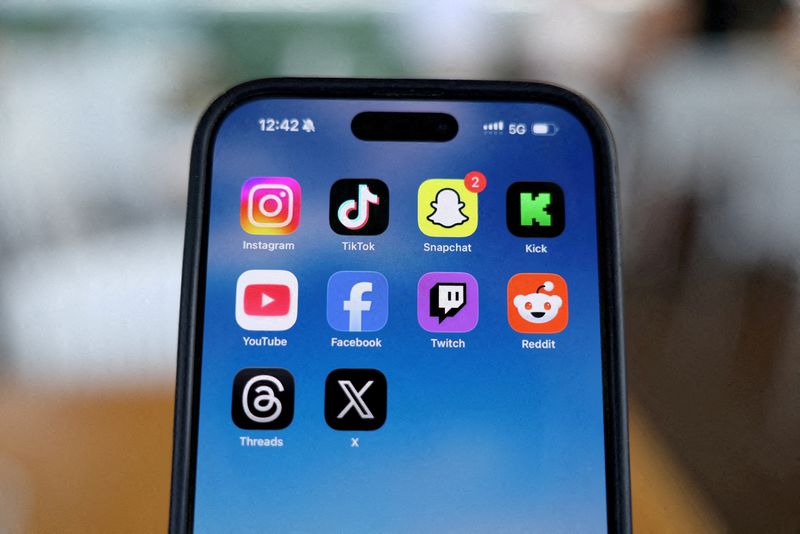
Indonesia has also designated platforms including X, Meta’s Facebook and Instagram, YouTube, and TikTok, owned by China’s ByteDance, as high risk.
’TECHNICAL GUIDANCE LACKING’
But as the clock ticks down to Saturday, neither parents nor children have much idea of what will happen – whether all under-16 users will find their accounts automatically deactivated, or whether there will be a new verification process.
“The policy is all concepts, but the technical guidance is still lacking,” said Ika Idris, a social media expert at Monash University, herself a mother of two children, aged 11 and 16, who use Roblox.
Calling the policy rushed, she said she was unsure what would happen on Saturday.
Earlier this month Meutya Hafid, Indonesia’s communications and digital minister, said the deactivation of current accounts of under-16s would take place gradually from Saturday.
She did not go into detail and the timeline, as well as the criteria for deactivation, remain unclear.
Officials at the ministry did not respond to requests for comment on details of the deactivation.
High-risk platforms must adjust their minimum age and deactivate accounts of underage users, as well as independently determine the risks they pose, according to a ministerial decree published this week.
Platforms are determined high risk if they fulfil criteria such as the possibility of talking to strangers, addictive qualities, and psychological risks, the ministry said.
PLATFORMS TAKE STEPS TO COMPLY
Roblox will introduce content and communications controls for players under 16 in Indonesia to comply with the country’s new social media regulations, the company said, though it did not provide details of the controls.
Berni Moestafa, Meta’s head of public policy, Indonesia and Philippines, said the company was “committed to protecting teens” on its platform, and had already launched “Teen Accounts” for Instagram and Facebook in Indonesia. Moestafa said the accounts included “built-in protections to address parents’ top concerns, including who their teens are talking to online, the content they’re seeing and whether their time is being well spent, by default.”
TikTok did not comment when asked about measures they had taken.
X said Indonesia’s minimum age requirement “prevents age-restricted social media platforms, including X, from letting people under 16 create or keep an account. It’s not our choice – it’s what Indonesian law requires.”
Google said on Friday it had placed safeguards for children and appreciated Indonesia’s “risk-based self assessment approach which incentivizes built-in protections and age-appropriate experiences for youth, as opposed to a blanket ban.”
It added that YouTube was often used for educational purposes and removing accounts of under-16s risked “creating an educational divide” in a country of 280 million people.
’I DON’T WATCH ANYTHING STRANGE’
Indonesia announced penalties last year for non-compliance with the protections, including sanctions and, in the worst cases, a block on the platform.
But experts remain sceptical about the measures’ implementation, and say children may also be able to find ways around the system.
“There are concerns this won’t be effective,” said Wahyudi Djafar, tech analyst and director of think-tank Catalyst Policy Works. “The implementation is complicated.”
Internet penetration in Indonesia reached 80.66% in 2025, according to a survey by the Indonesia Internet Service Providers’ Association. The survey showed it was as high as 87.8% among “Gen Z” users aged 13 to 28.
“I don’t watch anything strange … just normal things,” said 10-year-old Andaru Brahma Satria, about potentially losing access to YouTube.
“I feel just a little bit sad.”



 MY INVESTMENT NEWS
Leave a comment