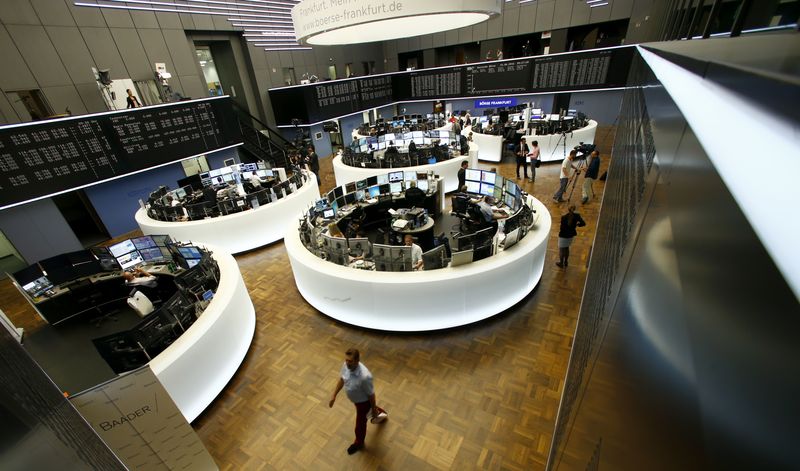
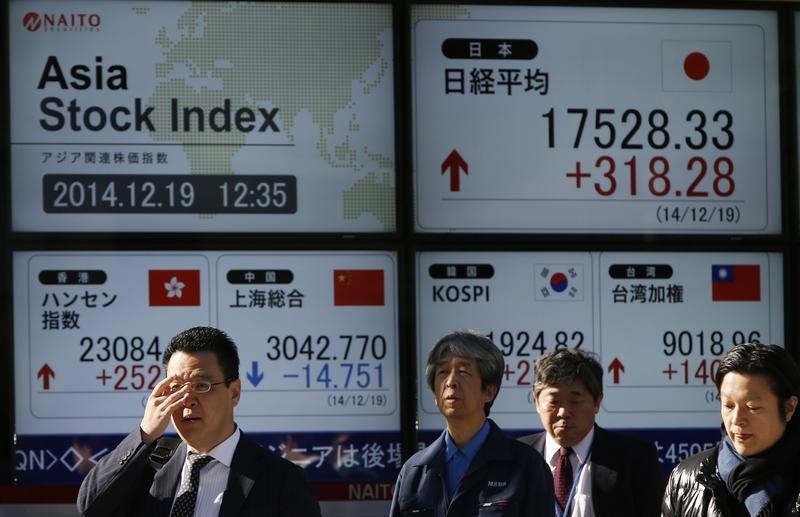
Major European stock markets were closed for a holiday on Monday, while Japanese and South Korean shares inched up in thin trading in Asia and U.S. stock futures were broadly muted.
Meanwhile, oil prices briefly climbed back above $110 a barrel, after President Donald Trump escalated his threats on Iran as he set a Tuesday deadline for the country to reopen the Strait of Hormuz.
In a social media post and media interviews, Trump issued an Easter warning that the U.S. would strike Iran’s power facilities if the strait, a crucial waterway through which roughly a fifth of the world’s oil flows, is not unblocked by Tuesday evening. Iran has rejected the ultimatum.
Trump had previously given Tehran until Monday to reach a deal and open the strait to tanker traffic. The weeks-long closure has threatened to place a major strain on countries around the world with a burst of fresh inflationary pressures, potentially weighing on wider economic growth.
Oil prices have surged since the start of the joint U.S. and Israeli assault on Iran in late February, driven by worries over constraints on key supplies of energy products used in an array of industries.
Brent crude futures, the global benchmark, was last higher by 0.3% at $109.37 a barrel. Prior to the start of the war, the Brent contract was exchanging hands at around $70 a barrel.
While markets remained on edge, some signs of emerged that Iran’s stranglehold on the Strait of Hormuz may be slightly softening. Iran and the United States have received a framework to end hostilities and reopen the strait, Reuters reported, citing a source aware of the proposals. The plan could take effect as early as Monday, the report said.
On Saturday, Iran also cleared Iraq to use the Strait of Hormuz, continuing a trend which has seen Tehran reopen the chokepoint on a country-by-country basis.


 MY INVESTMENT NEWS
Leave a comment