Iran is preparing for high-stakes talks with the United States in Islamabad, even as tensions around the Strait of Hormuz and continued fighting in Lebanon threaten to undermine a fragile ceasefire. A two-week truce between Washington and Tehran, brokered by Pakistan, has created a narrow diplomatic window, but key conditions on both sides remain unresolved.
Iranian negotiators are set to arrive in Islamabad on Thursday night for high-stakes talks with the U.S. Iran’s envoy to Pakistan, Reza Amiri Moghadam, confirmed the arrival on social media, even as tensions remain high over the scope of the current truce. While the U.S. and Iran recently established a two-week ceasefire, the Wall Street Journal reported that Tehran initially conditioned its participation on a halt to fighting in Lebanon—a demand complicated by Israel’s stance that its Lebanese campaign is separate from the deal.
Pakistan’s government has strongly condemned new Israeli strikes on Lebanon. Islamabad stated that these actions threaten Middle East stability and global peace efforts, while calling for urgent international intervention to stop the aggression. Other nations, including France and Italy, have also voiced opposition to the offensive.
White House Press Secretary Karoline Leavitt confirmed that Vice President JD Vance will lead the U.S. negotiating team in Islamabad. He will be joined by senior advisers Jared Kushner and Steve Witkoff with the first round of formal talks set for Saturday morning.
“Even with the question marks around a ceasefire, the fact one had been agreed led to a huge wave of optimism, with investors feeling much clearer about the path to a de-escalation,” Deutsche Bank strategists including Henry Allen wrote in a note.
Hormuz tensions continue
Iran has signaled that shipping through the Strait of Hormuz will resume under strict conditions tied to U.S. actions in the region. Deputy Foreign Minister Saeed Khatibzadeh said Tehran would allow safe passage in line with “international norms and international law” only after Washington ends what he described as “aggression” and Israel halts operations in Lebanon.
“You cannot have a cake and eat it at the same time,” he said, describing the message delivered to Washington.
Iran has already moved to tighten control over the waterway. Its navy warned commercial vessels to coordinate with the Islamic Revolutionary Guard Corps and follow designated routes due to risks such as possible mines.
Shipping data underscores the disruption. Only a handful of vessels with active tracking systems passed through the strait on the first day of the ceasefire, far below normal levels. Much of the remaining traffic consists of so-called “dark fleet” tankers operating without trackers, often used to transport sanctioned Iranian crude.
European leaders have warned that any restrictions could carry broad economic risks. Italian Prime Minister Giorgia Meloni said any additional Iranian measures could have “unpredictable economic consequences,” stressing the need for full freedom of navigation.
Lebanon fighting complicates ceasefire
At the same time, the situation in Lebanon is testing the scope and credibility of the U.S.-Iran agreement. Israel has continued its military campaign against Hezbollah, carrying out strikes on densely populated areas of Beirut. Lebanese authorities said at least 182 people were killed in a single day, marking the deadliest escalation in the current phase of the conflict.
Israeli Prime Minister Benjamin Netanyahu said the ceasefire does not apply to operations against Hezbollah, contradicting expectations from Pakistan and other mediators that the deal would reduce broader regional violence.
Iran has directly linked its stance on Hormuz to developments in Lebanon. Officials said the strait was effectively closed in response to Israeli actions, framing maritime restrictions as leverage tied to the wider conflict.
This divergence highlights the limits of the current truce. While Washington and Tehran have agreed to pause direct hostilities, the continuation of Israel’s campaign against Hezbollah risks prolonging instability and complicating negotiations.
Iran’s envoy to Pakistan confirmed that negotiators would still attend “serious talks” with U.S. officials in Islamabad, despite the ongoing fighting.
Trump: No military withdrawal without “real deal”
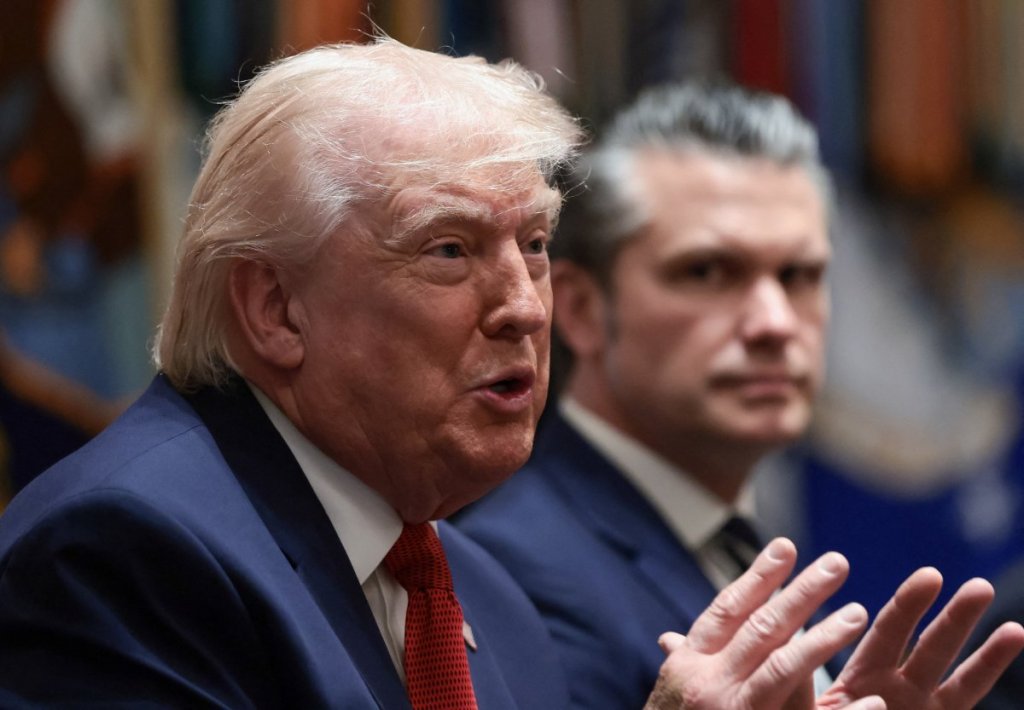
U.S. President Donald Trump said on Wednesday evening that all U.S. ships, aircraft, and military personnel will remain in place around Iran until a “real agreement” is reached with Tehran.
Trump, in a social media post, threatened that the “shootin’ starts” if no agreement was reached, although he saw such a scenario as highly unlikely.
Trump repeated his demands for an agreement entailing “NO NUCLEAR WEAPONS and, the Strait of Hormuz WILL BE OPEN & SAFE,” claiming that such a deal was “agreed a long time ago.”
Trump’s comments come after the U.S. and Iran agreed to a tentative, two-week ceasefire earlier this week. But Iran almost immediately accused the U.S. and Israel of violating the terms of a 10-point peace proposal.
Tehran also said that planned ceasefire talks in Pakistan were “unreasonable,” and called for Lebanon to be included in a peace deal. Israel continued to attack Lebanon in the late hours of Wednesday.
Trump has repeatedly touted victory over Iran, claiming that the U.S. and Israel had wiped out Iran’s navy and missile capabilities. The president has also claimed to have largely hampered Iran’s nuclear ambitions.
But Tehran has kept up its offensive against U.S., Israel, and the surrounding Gulf countries, and has also kept the Strait of Hormuz– a key shipping channel– largely blocked. Iranian officials have also largely rebuked U.S. calls for the country to cease its uranium enrichment activities.
Direct peace talks between the U.S. and Iran– the first since their conflict began in late-February– are set to take place in Pakistan on Friday. But the main agenda of the talks, as well as the terms of a potential ceasefire, remain largely unclear.
The U.S. launched its largest ever military buildup in the Middle East since 2003 earlier this year, with two aircraft carriers, strike groups, and about 50,000 troops being deployed to the region.


 MY INVESTMENT NEWS
Leave a comment