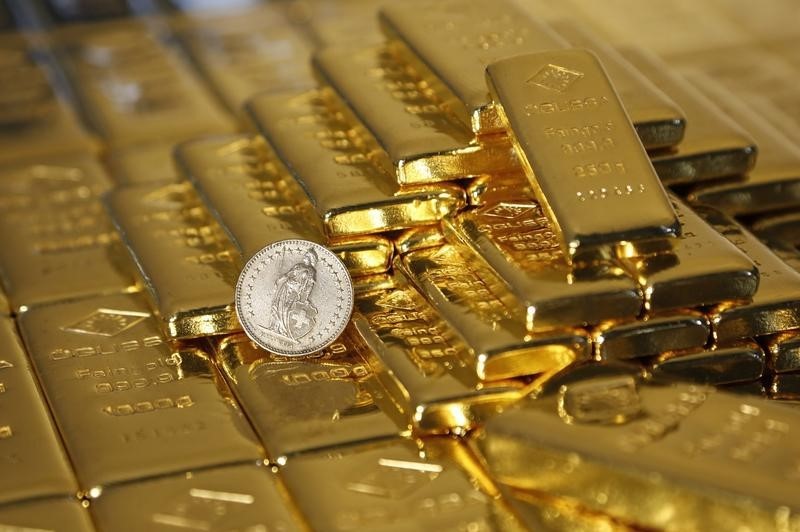
Gold prices slipped on Wednesday as the dollar turned slightly higher, amid uncertainty over peace talks between the U.S. and Iran and whether a deal would be reached.
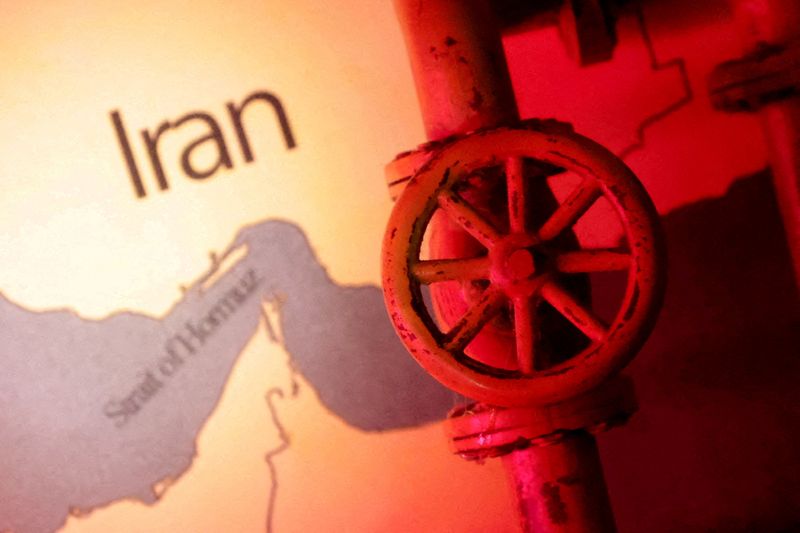
Washington rejected Iranian claims that a peace deal would involve the restoring of commercial shipping through the critical Strait of Hormuz to pre-war levels within a month.
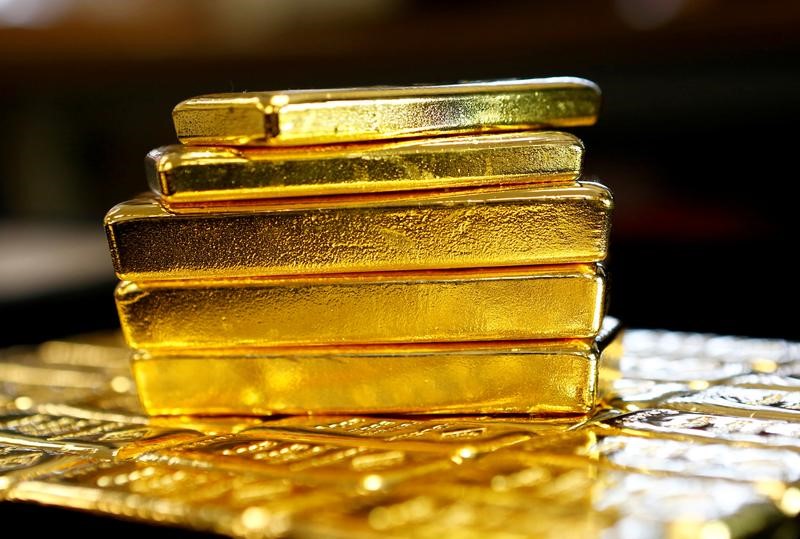
At 15:04 ET (19:04 GMT), spot gold fell 1.2% to $4,452.24/oz, while gold futures dropped 1.1% to $4,483.55/oz.
Among other precious metals, spot silver shed 2.9% to $74.7810/oz and spot platinum declined 1.1% to $1,930.85/oz.
Several outlets including Reuters and Fox News said Iran had obtained a draft of an initial, unofficial structure for a memorandum of understanding (MoU) that would end hostilities with the U.S., citing Iranian state TV.
As per the details of the MoU, Iran would restore commercial shipping through the critical Strait of Hormuz to pre-conflict levels within a month, while the U.S. would lift its naval blockade of Iran’s ports and coastline and would withdraw all military forces from the country’s vicinity.
However, the White House pushed back against the reports. Its official Rapid Response 47 account said: “This report from Iranian controlled media is not true and the MOU they ’released’ is a complete fabrication. Nobody should believe what Iranian state media is putting out. FACTS MATTER.”
President Donald Trump had earlier on the weekend said an MoU had been “largely negotiated” after a call with regional leaders, boosting hopes for an imminent end to the conflict. But those hopes were dented on Tuesday after the U.S. military said it had carried out “defensive” strikes on Iran and Tehran said it had retaliated. Al Jazeera reported that indirect negotiations between the parties have continued, despite the fresh exchange of fire.
“They want very much to make a deal. So far, they haven’t gotten there. We’re not satisfied with it, but we will be — either that or we’ll have to just finish the job… They’re negotiating on fumes, but we’ll see what happens,” Trump said at a cabinet meeting on Wednesday.
When asked what were the current state of talks with Iran, Trump said “we’re doing very well.”
“They’re starting to give us the things that they have to give us — and if they do, that’s great, and if they won’t, then the man on my left is going to finish them off,” the president said, referring to U.S. Secretary of War Pete Hegseth.
“We can make a good deal right now, but maybe not a great deal — and if it’s not a great deal, we’re not making it,” Trump added.
Oil prices slid on Wednesday on hopes that normal tanker traffic through the Strait of Hormuz would resume soon. Scores of vessels have already transited the strait this week under Iranian navy supervision, according to state media.
The effective shuttering of the strait, a vital waterway through which a fifth of the world’s oil and gas flows, has led to the biggest supply disruption in history. Surging oil prices have led to an inflationary shock across the globe, leading traders to raise their expectations for central bank interest rate hikes and dumping government bonds which in turn drove up yields. Higher rate environments generally do not bode well for non-yielding assets such as gold.
Beyond gold, aluminum prices climbed to a four-year peak on the London Metal Exchange due to tighter supply conditions caused in part by the conflict in the Middle East.
“The rally in the global aluminum market could spur record outflows from China, where elevated prices are capping consumption. Aluminum on the LME is trading at its steepest premium to Shanghai futures since March 2022, after the war in the Middle East choked supplies from a key producing region,” Neil Welsh, head of metals at Britannia Global Markets, said.
 MY INVESTMENT NEWS
Leave a comment