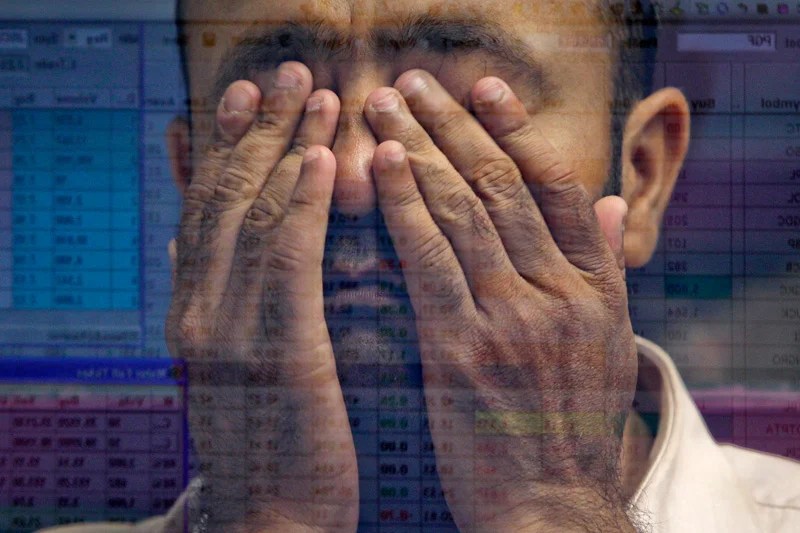
Asian stocks fell sharply on Monday with technology and artificial intelligence stocks leading declines as investors collected big profits from a major rally in the sector, while worsening military tensions in the Middle East also weighed.
South Korea’s KOSPI was by far the worst performer in the region on deep losses in heavyweight chipmaking stocks, while Japan’s Nikkei 225 also tumbled on tech losses.
Regional markets took an extremely weak lead-in from Wall Street’s close on Friday, where major benchmarks tumbled between 1% and 4.5%. Tech was the biggest decliner, with a hotter-than-expected nonfarm payrolls reading also driving up expectations for interest rate hikes.
But S&P 500 Futures and Nasdaq 100 Futures rose 0.2% and 0.7%, respectively, in Asian trade, with investors looking to a potential rebound in U.S. tech shares from Friday’s slump.
KOSPI slides 8%, Nikkei down as tech stocks tumble
South Korea’s KOSPI index was by far the worst performer in Asia, tumbling as much as 8.8% on sharp losses in local chip heavyweights.
Samsung Electronics Co Ltd (KS:005930) and SK Hynix Inc (KS:000660)– the two memory chip makers that had driven a bulk of the KOSPI’s recent gains– fell 4.7% and 1.1%, respectively. SK Hynix’s losses were limited by the company announcing an advanced chips tie-up with AI major NVIDIA Corporation (NASDAQ:NVDA).
In this articleJP225-3.74%HK50-1.33%NSEI-0.77%KS11-8.29%STI-1.62%SSEC-1.70%TOPX-2.45%CSI300-2.14%
Gains in tech saw the KOSPI largely outpace global stock markets so far this year, although this also left the sector vulnerable to profit-taking.
Japan’s Nikkei 225 index slid 3.6%, pressured chiefly by losses in local tech majors as investors questioned whether the AI tech rally had gone too far.
Tech major SoftBank Group Corp. (TYO:9984) slid 7.5% and was among the biggest weights on the Nikkei, while chipmaking majors including SUMCO Corp. (TYO:3436) and Renesas Electronics Corp (TYO:6723) slid over 10% each.
Japan’s broader TOPIX index slid 2.7%, also spooked by a downward revision in the country’s gross domestic product figures for the first quarter.
Japan’s economy grew 1.8% in the first quarter, lower than prior estimates of 2.1%, pressured chiefly by cooling business spending, data showed on Monday.
The print raised some questions over the impact of the Iran war on growth, and also saw investors questioning whether the Bank of Japan will have enough headroom to raise interest rates next week.
Asia stocks slide on Iran-Israel escalation, rate jitters
Beyond tech, broader Asian markets fell on Monday after Iran and Israel traded airstrikes on Sunday, marking their first open exchange of hostilities since an early-April ceasefire.
The development further undermined hopes for a lasting peace deal with Iran, even as U.S. President Donald Trump and other officials said an agreement was close. Trump had earlier on Sunday also called on Israel to not retaliate against Iranian strikes over the weekend, citing progress towards a peace deal.
Oil prices rose sharply on the weekend development, further spooking Asian markets. China’s Shanghai Shenzhen CSI 300 and Shanghai Composite indexes fell 1.6% and 1.2%, respectively, while Hong Kong’s Hang Seng shed 1%.
Singapore’s Straits Times index fell 1.2%. Futures for India’s Nifty 50 index rose 0.3% after the Nifty logged deep losses last week.
Beyond geopolitics, Asian markets were also spooked by a strong U.S. nonfarm payrolls reading on Friday. Strength in jobs gives the Federal Reserve more headroom to maintain rates or even raise them– a trend that bodes poorly for risk-driven markets.


 MY INVESTMENT NEWS
Leave a comment