Oil prices rose in Asian trade on Friday, rebounding from recent losses as markets awaited more signs of progress towards a U.S.-Iran peace deal.
Upbeat comments from U.S. officials on peace talks with Iran saw oil prices nursing deep losses for the week.
But crude still remained relatively strong, as the Strait of Hormuz remained closed and as the U.S. and Iran still remained at odds over key issues, chiefly Tehran’s nuclear activities.
Brent oil futures for July jumped 1.5% to $104.12 a barrel by 00:11 ET (04:11 GMT), while West Texas Intermediate crude futures rose 1% to $93.84/barrel.
Oil down between 4-7% this week amid Iran peace hopes
Brent and WTI futures were down between 4% and 7% this week, coming under pressure from some upbeat comments on U.S.-Iran peace talks.
Earlier this week, Trump said he had postponed a planned military attack on Iran, and had flagged progress in talks with Iran. Trump’s comments were a major weight on oil prices this week, as markets looked to an end in the Iran war.
Trump later said that the Iran war was in its final stages. Separately, Iran also said it was reviewing the U.S.’ latest position on a peace deal.
Reports on Thursday said that the U.S. and Iran had reached a final draft for a peace agreement, although neither side confirmed such a development.
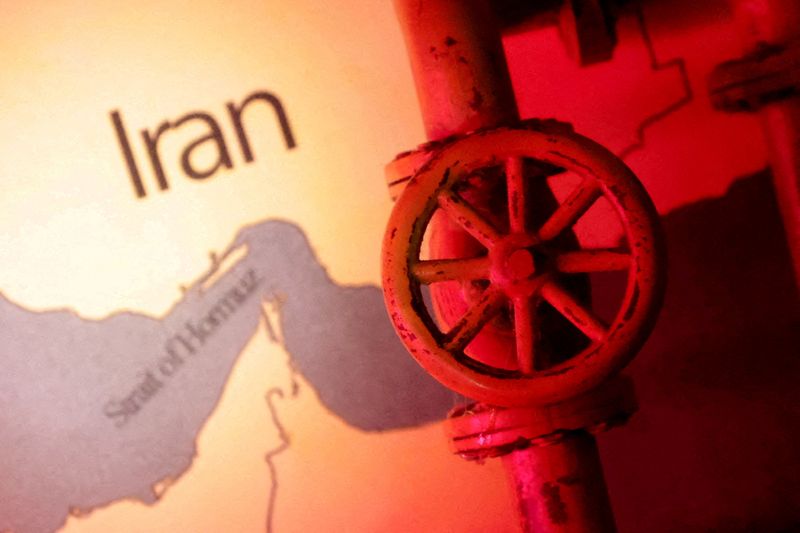
But oil flows through the Strait of Hormuz remained scant, keeping global supplies largely pressured. Iran was also seen preparing measures to collect tolls for transit through Hormuz– a notion that U.S. officials have largely rebuked.
The U.S. and Iran struck opposing stances over Iran’s uranium stockpile and plans to control the Strait of Hormuz. U.S. President Donald Trump on Thursday reiterated the need to seize Iran’s uranium stockpile, arguing that the country could not be allowed to have a nuclear weapon.
Trump also said that he was ready to order strikes against Iran if ongoing negotiations did not yield any progress.
But despite oil’s losses this week, prices were still trading up between 50% to 70% this week, as disruptions in Hormuz knocked out roughly 20% of the world’s supplies.
Asian markets were especially impacted by the Hormuz outage, while the U.S. was seen ramping up its exports to fill a supply gap.
Washington earlier this week extended a sanctions waiver on seaborne Russian oil to help soothe supply disruptions.

 MY INVESTMENT NEWS
Leave a comment