Futures linked to the main U.S. indices hover just below the flatline, with investors assessing euphoria around artificial intelligence and ongoing tensions in the Middle East. Oil prices once again move higher, while the OECD cuts its outlook for world economic growth. The Trump administration proposes at least 10% tariffs on imports from 60 economies following a probe into goods allegedly produced using forced labor, while SpaceX is reportedly targeting a valuation of $1.75 trillion in a mammoth IPO next week.
1. Futures muted
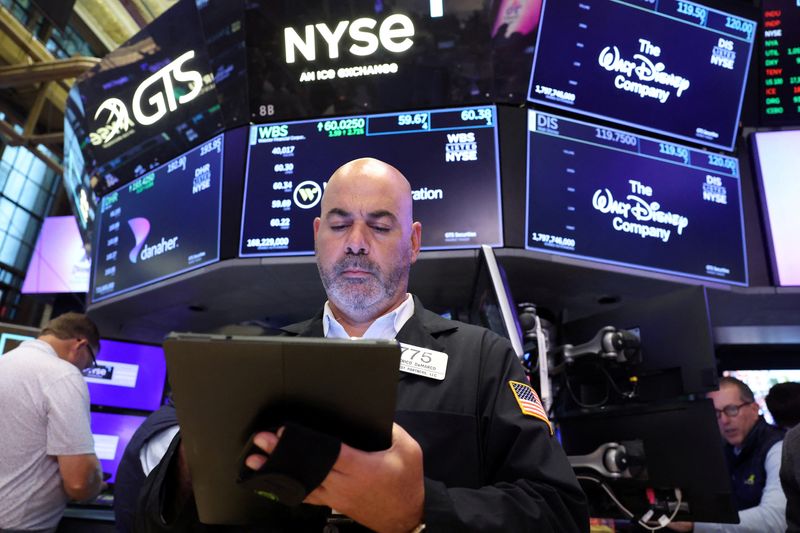
U.S. stock futures were subdued on Wednesday after the benchmark S&P 500 extended a streak of record closing levels, as runaway enthusiasm for artificial intelligence helped to offset headwinds from ongoing Middle East tensions.
By 03:31 ET (07:31 GMT), the Dow futures contract had dipped by 109, or 0.2%, S&P 500 futures had edged down by 4 points, or 0.1%, and Nasdaq 100 futures were mostly unchanged.
On Tuesday, the S&P 500 eked out an all-time closing peak for the ninth straight session, its longest such streak since May 2025. The blue-chip Dow Jones Industrial Average added 0.4%, notching its own record high, while the tech-heavy Nasdaq Composite inched up marginally.
All three of the major averages have now logged all-time high closing levels for five consecutive sessions — a streak not seen since 2017.
Chip stocks underpinned much of the rally, with an index tracking these names gaining 5.9%. Since slumping to a 2026 trough in March, the PHLX Semiconductor Index has now surged by over 90%, highlighting the hopes investors have for a massive wave of investment in the infrastructure needed to power cutting-edge AI models. One of the standout performers from the session was Marvell Technology, whose shares soared after Nvidia CEO Jensen Huang suggested that the group was on its way to becoming the “next trillion-dollar company.”
In this articleUS500+0.13%DJI+0.45%MRVL+32.52%LCO+2.51%ESM26-0.07%YMM26-0.28%NQM26+0.01%IXIC+0.03%SOX+5.87%SPCX0.00%
On the economic calendar for the day, investors will be keeping tabs on a reading of activity in the key services sector, along with a report on private-sector payrolls for May.
2. U.S. and Iran trade fresh strikes
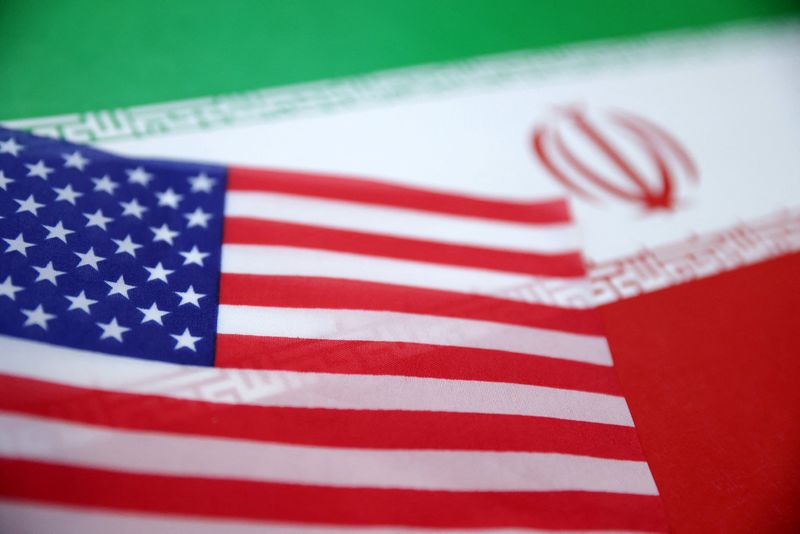
The U.S. military said that Iranian air attacks on Kuwait, Bahrain and other targets had either been repulsed or failed, Reuters reported. Meanwhile, Iranian state media suggested that the Islamic Revolutionary Guard Corps had struck the U.S. Fifth Fleet headquarters in Bahrain in retaliation against a U.S. attack on a communications tower south of Qeshm, the news agency said.
These developments dampened hopes that the U.S. and Iran may be approaching a deal to end their more than three-month old war, even as President Donald Trump stressed that talks between Washington and Tehran are ongoing.
Worries have abounded that the longer the conflict drags on for, the deeper the impact will be on the global economy. Such fears were underscored by the OECD on Wednesday, which slashed its world growth outlook and warned of a worsening economic backdrop should the war continue to disrupt energy markets.
OECD Chief Economist Stefano Scarpetta flagged that, in the worse scenario, shipping snags will last well into next year, possibly forcing some economies close to — or indeed into — a recession.
3. Brent oil rises
Inflation remains a major issue as well, with the OECD predicting that, again in a worse case, global prices could increase by 0.4 percentage points in 2026 and 1.3 percentage points in 2027.
Much of that is due to the months-long effective closure of the Strait of Hormuz, a vital waterway off Iran’s southern coast through which roughly a fifth of the world’s oil and liquefied natural gas flowed before the outbreak of the conflict in late February.
As talks between the U.S. and Iran stall, markets are grappling with the notion that the strait will continue to be shuttered to tanker traffic, driving up oil prices, fueling inflation and possibly persuading central banks to lift interest rates in response.
Brent crude futures, the global oil benchmark, was last trading 2.0% higher at $97.93 a barrel. Optimism that a U.S.-Iran peace deal could be forged has brought the contract below recent peaks above $100 a barrel, yet Brent is still topping pre-war levels.
4. U.S. proposes forced labor tariffs
The Trump administration on Tuesday proposed sweeping new tariffs of at least 10% on imports from 60 economies after finding that their failure to block goods made with forced labor unfairly harmed American businesses and workers.
Investigations conducted under Section 301 of the Trade Act concluded that the economies’ policies regarding forced-labor imports were “unreasonable” and burdened U.S. commerce, the Office of the U.S. Trade Representative said.
“The failure of our most important trading partners to address the importation of goods made with forced labor is unacceptable,” said U.S. Trade Representative Jamieson Greer.
Under the proposal, countries that have implemented forced-labor import bans, committed to doing so under trade agreements, or operate partial restrictions would face additional duties of 10%.
5. SpaceX aiming for roughly $1.75 trillion valuation in IPO – Reuters
SpaceX plans to raise $75 billion in its initial public offering by selling about 555.6 million shares at $135 per share, Reuters reported on Tuesday, citing a source familiar with the matter.
The Elon Musk-led rocket and satellite company is targeting a valuation of $1.75 trillion in a blockbuster IPO next week, with Reuters separately reporting that the offering will consist entirely of new shares.
The roadshow for the SpaceX IPO is expected to begin this Thursday.
Earlier reports said SpaceX is planning to set the terms of its IPO by as soon as Wednesday afternoon. The company is set to kick off a spate of mega IPOs this year, with artificial intelligence startups OpenAI and Anthropic also set to publicly list in the coming months.

 MY INVESTMENT NEWS
Leave a comment