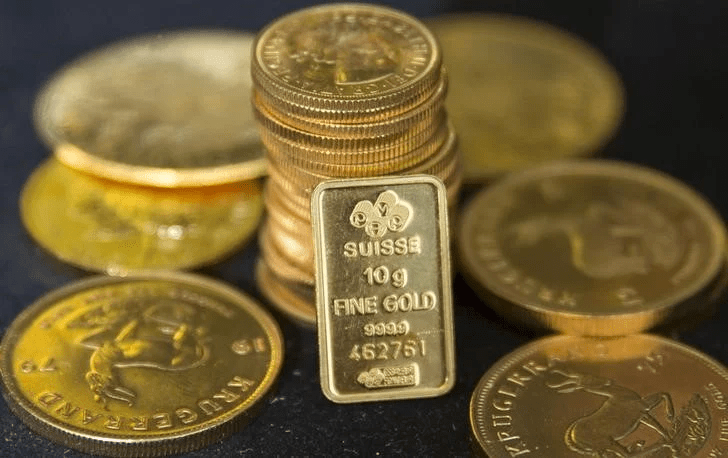
Gold prices rose on Thursday, as crude costs dipped following a ceasefire agreement between Israel and Lebanon, easing worries over broader inflationary pressures.
At the same time, the U.S. dollar softened, possible making gold less expensive for overseas buyers.
By 06:23 ET (10:23 GMT), spot gold had ticked higher by 0.7% to $4,465.24 an ounce, while gold futures gained 0.6% to $4,493.12 an ounce.
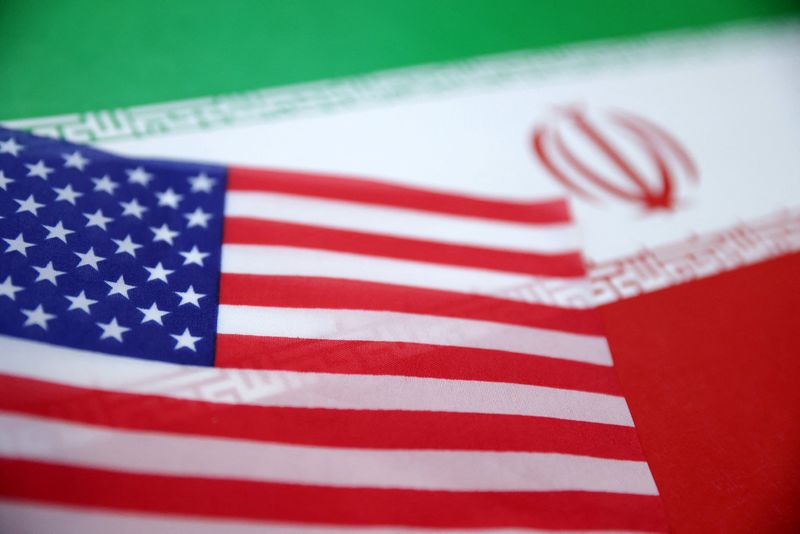
Israel and Lebanon have agreed to renew their shaky ceasefire, bolstering hopes for an eventual peace deal between the U.S. and Iran. An agreement between Washington and Tehran has been contingent upon a cessation to fighting in Lebanon, where U.S.-aligned Israeli forces have been battling Iran-backed Hezbollah militants.
Following a fourth round of U.S.-mediated discussions, both Israel and Lebanon said the truce would be “contingent on a complete cessation of Hezbollah fire and the evacuation of all Hezbollah operatives” from areas south of the Litani River in southern Lebanon.
“These steps will enable progress towards a comprehensive peace and security agreement,” a joint statement said. Hezbollah, notably, did not take part in the negotiations.
On Wednesday, U.S. President Donald Trump suggested that progress could be made in talks with Iran as soon as this weekend, while Iran’s foreign minister said contact with Washington has not been cut off. Earlier this week, media reports suggested that Tehran had halted sending messages to the U.S. through mediators.
Trump has told aides that he will not resume attacks on Iran unless U.S. forces are killed, the Wall Street Journal reported.
The White House is also possibly facing escalating demands at home to end the war. The House of Representatives, despite being controlled by Trump’s Republican party, voted in favor of a resolution blocking the president from continuing the conflict. The measure still needs Senate approval, as well as the backing of two-thirds majorities in both chambers to override a veto from Trump.
Brent crude futures, the global oil benchmark, were last down by 1.5% at $96.30 a barrel. U.S. West Texas Intermediate crude futures dropped by 1.2% to $94.84 a barrel.
Oil prices remain well above pre-war levels, reflecting continued supply constraints out of the Strait of Hormuz, a narrow waterway off Iran’s southern coast which has been effectively shuttered to commercial vessel traffic since the start of the joint U.S.-Israeli assault on Iran in late February.
Concerns have abounded that the energy shock will spark an inflation wave that causes central banks, including the Federal Reserve, to lift interest rates in response. This may not bode well for non-yielding assets like gold, which tend to underperform in elevated rate environments.
The rate-sensitive U.S. 2-year Treasury yield, which has risen sharply in recent months, dipped on Thursday, as did its benchmark 10-year counterpart. Yields tend to move inversely to bond prices.
“We expect most central banks across developed markets—including the Federal Reserve, Bank of England, and others—to keep rates unchanged in the near term,” analysts at UBS said in a note.
Investors are now looking ahead to new monthly jobs report from the U.S. on Friday, which could provide some insight into the impact of the Iran war on the labor market. Along with keeping a lid on inflation, Fed officials are tasked with calibrating interest rates to promote maximum employment.

 MY INVESTMENT NEWS
Leave a comment