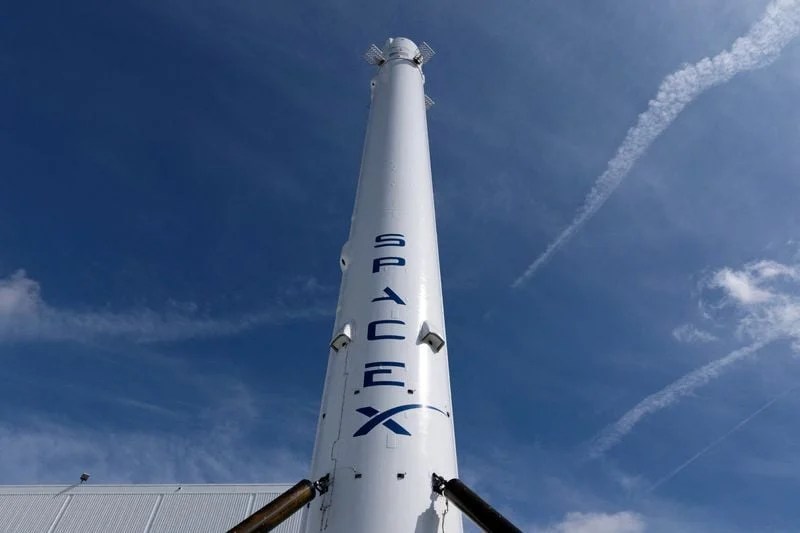
SpaceX (NASDAQ:SPCX) shares extended gains in premarket trading Monday after surging 19% on their Nasdaq debut Friday, when the rocket and satellite company completed the biggest initial public offering (IPO) in history and closed with a market capitalisation of roughly $2.1 trillion.
The stock, trading under the ticker SPCX, opened at $150 on Friday after SpaceX raised $75 billion in the offering, reached an intraday high of $176.52, and closed at around $161.
It then rose about 5.8% in premarket trading by 04:08 ET (08:08 GMT), adding roughly another $120 billion to its market cap.
More than 500 million shares changed hands on the first day, approaching the trading volume Facebook saw on its debut in 2012, which drew about 580 million shares.
On a JPMorgan Chase livestream ahead of the listing, Chief Executive Elon Musk said SpaceX had been cash-flow positive since around 2015 and described the IPO as the start of “a significant growth phase.”
He outlined plans to put more than 100,000 satellites in orbit for communications purposes and to build artificial intelligence data centres in space, among other initiatives.
Analysts at Jefferies, in a note republished Friday to coincide with the IPO, laid out the investment case for the broader space economy. The broker’s key argument is that “space is now a strategic industrial sector” where U.S. and Chinese public policy and geopolitics will drive returns.
Jefferies estimated the global space economy has reached $600 billion and could triple to $1.8 trillion by 2035, with defence the fastest-growing category within the sector.
The U.S. government accounts for roughly 60% of global government spending on space at around $80 billion, more than the rest of the world combined, while China spends around $20 billion in nominal terms.
The Space Force budget surged 40% year-on-year in fiscal 2026, driven by the Golden Dome missile defence programme, pushing Space Force spending to $40 billion, well above NASA’s $24 billion budget.
SpaceX ranks as NASA’s second-largest commercial contractor by dollars received, behind only Caltech, with $2.1 billion in full-year 2025 contracts spanning launch services, communications and IT infrastructure.
“The U.S. government has effectively outsourced significant space activity to SpaceX, creating an inextricable linkage between federal spending priorities and the company’s business,” the analysts wrote.
 MY INVESTMENT NEWS
Leave a comment