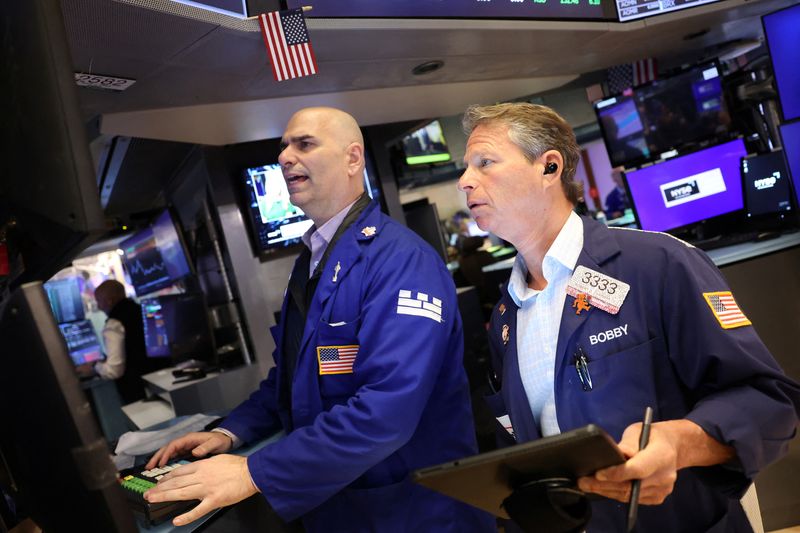
U.S. stock futures climb after the U.S. and Iran announce an interim peace agreement. While some of the details of the deal remain unclear, President Donald Trump has said the Strait of Hormuz will be lifted later this week. Oil prices slipped, while gold gained and the dollar weakened, as investors also attempted to assess the implications of a deal on an impending Federal Reserve interest rate decision.
1. Futures rise
Stock futures on Wall Street pointed higher on Monday, following the announcement of an interim peace deal between the United States and Iran that could end a more than three-month old war which has shaken the global economy.
By 03:03 ET (07:03 GMT), the Dow futures contract had risen by 492 points, or 1.0%, S&P 500 futures had climbed by 89 points, or 1.2%, and Nasdaq 100 futures had increased by 590 points, or 1.9%.
“The fizz in staying in markets this morning as after 107 days and a seemingly endless number of false dawns, we finally have a deal between the U.S. and Iran to end the war and open the Strait of Hormuz,” analysts at Deutsche Bank said in a note.
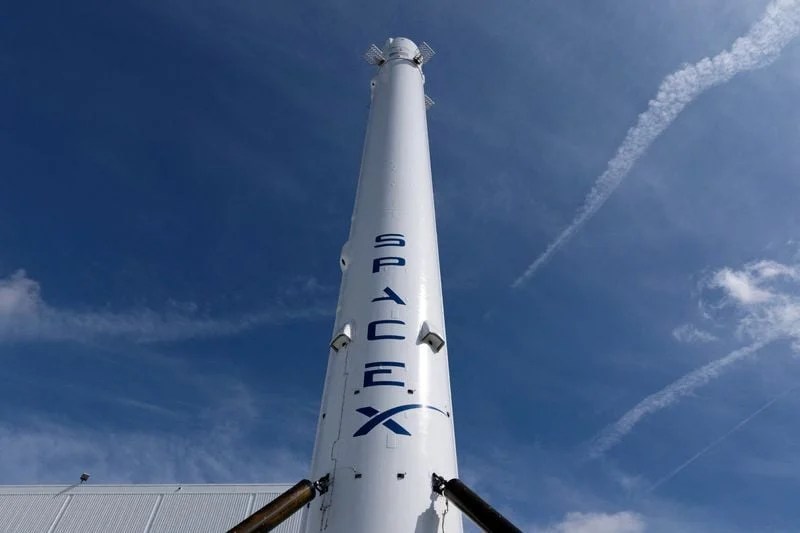
The main averages advanced to finish the prior week, buoyed by the hopes of an imminent agreement between Washington and Tehran as well as a spike in shares of SpaceX after their record-setting public debut. Even as some analysts highlighted worries around SpaceX’s fundamentals, the stock jumped above its IPO price of $135 a share, giving Elon Musk’s reusable rocket group a value of more than $2 trillion and making it one of the largest publicly listed U.S. firms.
In this articleXAU/USD+2.58%GC+2.60%LCO-4.95%ESU26+1.22%CL-5.41%YMU26+0.85%NQU26+2.06%RKLB-10.79%PL-8.84%SPCX+19.22%
Other space-industry names, such as Rocket Lab and Planet Labs, rallied in the wake of the flotation.
2. U.S., Iran announce interim peace deal
The apparent resolution to the Iran war, and the subsequent reaction across an array of assets, captured much of the attention as the new trading week begins.
Both the U.S. and Iran have announced that a peace deal has been reached, with the agreement due to be signed in Switzerland on Friday. Neither side offered a list of the details of the deal, the Wall Street Journal reported.
Media reports have suggested that the deal may feature a 60-day period designed to allow for negotiations on Iran’s nuclear program. President Trump, who has vowed to eradicate Iran’s nuclear ambitions, also told the WSJ that a deal includes an agreement from Iran not to obtain nuclear weapons. But Trump did not mention this in social media posts on Sunday.
Shehbaz Sharif, the prime minister of Pakistan, which has served as a mediator throughout the conflict, said the two nations have “declared the immediate and permanent termination of military operations on all fronts.” That includes Lebanon, Sharif said.
Concerns had surrounded the outlook for the deal after U.S.-allied Israel carried out attacks on Iran-backed Hezbollah militia in Lebanon over the weekend, leading to a stern rebuke of Israeli Prime Minister Benjamin Netanyahu by Trump.
3. Brent tumbles
Notably, Trump did mention in a social media post that the Strait of Hormuz would be reopened on Friday, saying the delay was due to mine-clearing operations in the narrow waterway off Iran’s southern coast.
The prospect of the resumption of flows through the strait, whose effective closure has crimped global energy supplies, sparked a renewed slide in oil prices that have hovered well above pre-war levels for weeks.
By 08:28 ET, Brent crude futures, the global oil benchmark, had slipped by 5.1% to $82.84 a barrel. U.S. West Texas Intermediate crude futures dropped by 5.8% to $79.93 a barrel.
Trump has also suggested that a longstanding American naval blockade of Iranian ports will be lifted at the same time as Iran’s restrictions on the Strait of Hormuz are removed. This could restart shipping in a vital conduit through which, before the outbreak of the war in late February, roughly a fifth of the world’s oil and liquefied natural gas traversed.
Still, some analysts have expressed skepticism that, even with a Middle East deal, oil prices will settle at prior levels, citing built-in geopolitical risk premiums and the time needed for supply chains to recover.
“Financial markets are once again excited about a potential Middle East peace deal and the possible resumption of energy flows out of the Gulf. Whether that delivers much lower energy prices is highly questionable,” analysts at ING said in a note.
4. Gold extends gains
Meanwhile, gold jumped, with spot prices for the yellow metal last gaining 2.3% to $4,315.44 an ounce, touching their highest level since June 9 and extending a streak of increases to a third consecutive session. Gold futures also bounced by 2.3% to $4,336.17 an ounce.
Partly bolstering bullion was a weakening in the U.S. dollar to a 10-day low against its major peers. The greenback has been viewed as a relative safe-haven asset during the war, leaving it vulnerable to a boost in risk sentiment following a peace deal.
A softer dollar can burnish gold by making it less expensive for overseas buyers.
At the same time, the drop in oil prices could help ease fears of a hawkish policy pivot by global central banks prompted by an energy-induced inflation spike. Non-yielding gold tends to underperform in elevated rate environments.
5. Fed meeting ahead this week
A key question now revolves around how, if at all, the peace agreement could impact the Federal Reserve’s upcoming policy decision on Wednesday.
Bets have grown that the Fed will keep rates steady this week and possibly opt to lift borrowing costs later in 2026. Meanwhile, wagers at the beginning of the year that the Fed would embark of rate cuts have been all but eliminated, especially after recent data points showed an acceleration in inflation.
“[I]t’s still very likely that the easing bias will be removed from the FOMC statement,” analysts at Vital Knowledge said in a note, referring to the rate-setting Federal Open Market Committee.
However, they argued that new Fed Chair Kevin Warsh, who is stuck between faster price growth and Trump’s insistence on aggressive rate cuts, “could put his thumb on the scale during the [post-decision] press conference and tip things in a dovish direction by reiterating” that several Fed members have indicated rate reductions would be warranted should the Iran conflict be resolved soon.
 MY INVESTMENT NEWS
Leave a comment