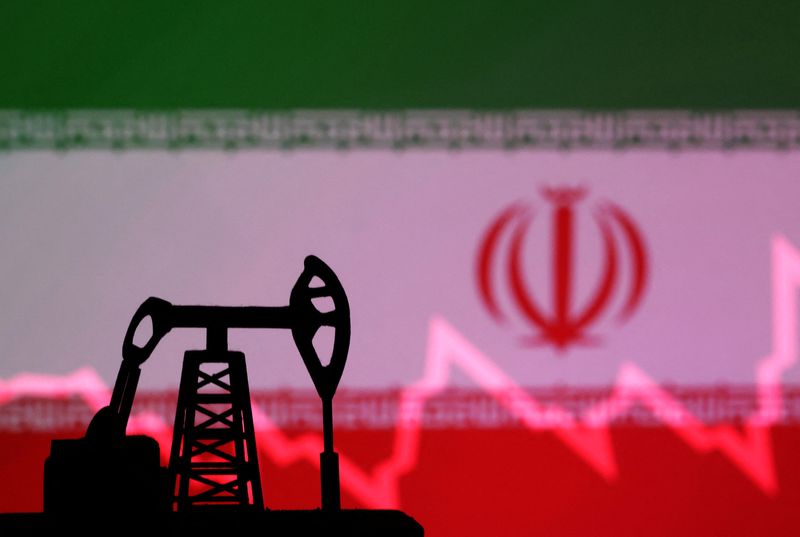
Oil prices rose sharply in early Asian trade on Monday after the U.S. said it had seized an Iranian cargo ship, while Tehran closed the Strait of Hormuz after briefly opening the channel over the weekend.
Brent oil futures jumped as much as 7% to $97.50 a barrel before trading at $95.14 a barrel by 21:49 ET (01:49 GMT).
Trump says Iran vessel seized; Tehran blocks Hormuz again
U.S. President Donald Trump said the military had fired on an Iranian-flagged cargo ship that tried to run a U.S. blockade, and had seized the vessel.
Iran decried the move and vowed retaliation, state media showed. This was after Tehran reopened the Strait of Hormuz over the weekend, only to close it in less than 24 hours. Oil had tumbled over 9% on Friday after Iran initially announced the reopening.
Tehran had then fired on several vessels attempting to cross the channel over the weekend.
The developments pointed to worsening tensions between the U.S. and Iran, and raised questions over whether more peace talks were even possible before a two-week ceasefire ends on April 21.
The U.S.-Israel war on Iran entered its eighth consecutive week, with the weekend developments presenting little scope for immediate de-escalation. Persistent disruptions in oil flows through the Strait of Hormuz are expected to keep crude prices underpinned in the coming days.
The channel supplies roughly a fifth of the world’s total oil consumption.
“Markets may have priced an overly swift resumption of energy flows. The standoff looks set to drag on as both sides test pain thresholds. Near term, some risk wobble and a USD rebound are likely,” OCBC analysts said in a note.
Still, they noted that the endgame remained a deal, “albeit via a messy path of brinkmanship with elevated tail risk.”
Oil had surged to nearly $120 a barrel with the onset of the war, but trimmed a bulk of its gains in the past two weeks after Trump touted peace talks with Tehran.
Additional peace talks unclear as ceasefire end looms
It remained unclear whether additional talks between the U.S. and Iran will take place before their ceasefire expires on Tuesday.
Trump said U.S. envoys would arrive in Pakistan on Monday evening for more talks, led once again by Vice President JD Vance.
But Iranian state media reported that Tehran had rejected more peace talks. The Tasnim news agency reported that Tehran had not made any decision to dispatch a negotiating delegation to Islamabad, and that no talks would take place as long as a U.S. naval blockade remained.
The U.S. blockaded all Iranian vessels and ports last week, likely as a bid to further pressure Iran into a ceasefire deal. This came after Pakistan-hosted ceasefire talks held last weekend yielded little progress.



 MY INVESTMENT NEWS
Leave a comment